Category: AI Visibility

  • How AI Is Changing Small Business Operations in 2026

    How AI Is Changing Small Business Operations in 2026

    How AI Is Changing Small Business Operations in 2026

    Artificial intelligence has quickly evolved from a futuristic concept into a practical business tool. What once seemed accessible only to large corporations is now being used by businesses of every size to improve efficiency, enhance customer experiences, and streamline daily operations.

    For small businesses in particular, AI is creating opportunities that would have been difficult to imagine just a few years ago. Tasks that once required multiple employees, countless hours, or expensive software systems can now be automated, simplified, or assisted by intelligent technology.

    As we move through 2026, the businesses that understand how to leverage AI effectively are finding new ways to save time, improve responsiveness, and create better customer experiences.

    The question is no longer whether AI will impact small businesses.

    The question is how businesses will choose to use it.

    AI for Small Business – The Evolution of Business Technology

    Technology has always influenced how businesses operate.

    From accounting software and email communication to websites and online marketing, each advancement has helped organizations become more efficient and connected.

    Artificial intelligence represents the next major step in that evolution.

    Unlike traditional software that simply follows instructions, AI can analyze information, generate responses, identify patterns, and assist with decision-making.

    This allows businesses to automate processes that previously required human intervention.

    Rather than replacing business owners or employees, AI often serves as a powerful assistant that helps teams accomplish more with the resources they already have.

    Customers Expect Faster Responses

    One of the most significant changes influencing businesses today is the expectation of immediate communication.

    Customers no longer expect to wait several days for a response.

    Many people expect answers within minutes.

    Whether someone is requesting a quote, asking about services, or seeking additional information, response speed often influences purchasing decisions.

    Businesses that respond quickly tend to create stronger first impressions.

    The challenge is that many small businesses operate with limited staff and cannot monitor inquiries around the clock.

    AI-powered communication tools help bridge that gap by providing immediate engagement even when business owners are unavailable.

    Reducing Administrative Work

    Administrative tasks consume a surprising amount of time.

    Scheduling appointments, responding to common questions, managing inquiries, collecting customer information, and organizing communication can easily occupy several hours each day.

    While these activities are important, they often prevent business owners from focusing on growth-oriented work.

    AI automation helps reduce repetitive administrative responsibilities.

    Instead of manually handling every interaction, businesses can automate common workflows while maintaining a professional customer experience.

    This creates more time for revenue-generating activities and strategic planning.

    Better Lead Management

    Many businesses lose opportunities simply because inquiries are not handled consistently.

    A customer may submit a form after business hours.

    Someone may call during a busy period.

    A potential client may request information while employees are occupied elsewhere.

    Without a system in place, opportunities can be delayed or overlooked entirely.

    AI-driven systems help businesses respond immediately, gather important information, and guide potential customers through the early stages of communication.

    This creates a smoother experience for prospects while improving lead management for business owners.

    Supporting Rather Than Replacing Employees

    One of the most common misconceptions surrounding AI is that it exists solely to replace human workers.

    In reality, many successful implementations focus on support rather than replacement.

    AI handles repetitive tasks.

    Employees focus on relationships, creativity, problem-solving, and expertise.

    For example, an AI system may answer common questions, qualify leads, or schedule appointments.

    The business owner or team member then steps in when personalized assistance is required.

    This partnership allows businesses to operate more efficiently without sacrificing customer service.

    Improving Customer Experiences

    Customers value convenience.

    They want answers quickly, processes to be simple, and communication to be clear.

    AI tools help businesses meet these expectations by providing:

    • Faster responses
    • Consistent communication
    • Improved availability
    • Streamlined customer interactions

    When implemented thoughtfully, automation enhances rather than diminishes the customer experience.

    The goal is not to remove the human element.

    The goal is to eliminate unnecessary friction.

    AI Is Becoming More Accessible

    Not long ago, advanced automation required large budgets and specialized technical expertise.

    Today, many AI-powered tools are designed specifically for small businesses.

    Solutions are available for:

    • Customer communication
    • Lead management
    • Appointment scheduling
    • Marketing automation
    • Content creation
    • Customer support

    This accessibility allows businesses of all sizes to benefit from technologies that were once available only to large organizations.

    The Competitive Advantage of Efficiency

    Small businesses often compete against larger companies with greater resources.

    Efficiency becomes a significant advantage.

    When routine tasks are automated, business owners can focus more attention on:

    • Customer relationships
    • Service quality
    • Business development
    • Strategic growth

    The result is often a more agile and responsive organization.

    Businesses that operate efficiently are better positioned to adapt to changing customer expectations and market conditions.

    Preparing for the Future

    Artificial intelligence is not a temporary trend.

    It represents a fundamental shift in how information is processed, communication is managed, and business operations are conducted.

    Companies that begin exploring AI today are building familiarity and experience that will benefit them in the years ahead.

    The goal is not to automate everything.

    The goal is to identify opportunities where technology can create meaningful improvements.

    Small, strategic implementations often produce significant results.

    Final Thoughts

    Artificial intelligence is changing the way small businesses operate by helping owners save time, improve responsiveness, and create better customer experiences.

    From lead management and customer communication to administrative efficiency and workflow automation, AI is becoming an increasingly valuable business tool.

    The businesses that thrive in the future will not necessarily be those with the largest budgets.

    They will be the businesses that learn how to use technology effectively while continuing to provide exceptional service.

    AI is not replacing small businesses.

    It is helping them compete, grow, and operate more efficiently than ever before.

    If you are not listed, get listed HERE
  • Featured Business Listings vs Standard Listings: What Businesses Need to Know

    Featured Business Listings vs Standard Listings: What Businesses Need to Know

    Featured Business Listings vs Standard Listings: What Businesses Need to Know

    Every business wants greater visibility online. Whether the goal is generating leads, increasing website traffic, attracting local customers, or building brand awareness, visibility remains one of the most important factors influencing business growth.

    Many directories offer both standard listings and featured listings, but business owners often wonder whether there is a meaningful difference between the two.

    The answer depends on how visibility is created and how potential customers discover businesses within a directory.

    Understanding the purpose of each listing type can help businesses make informed decisions about their digital presence and determine which option best aligns with their goals.

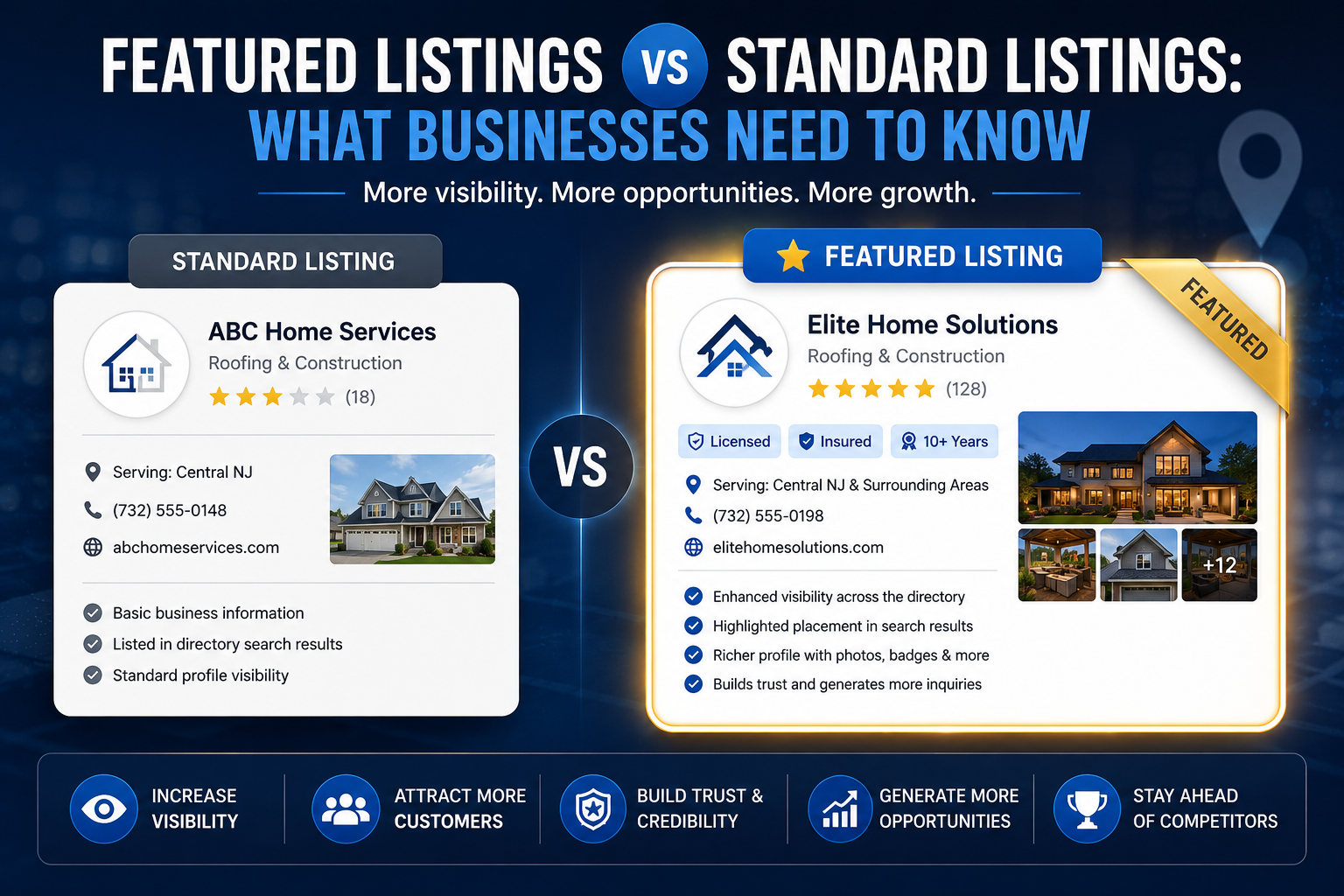
    A standard listing serves as the foundation of a business’s presence within a directory.

    It allows businesses to establish visibility, provide contact information, showcase services, and become discoverable by potential customers searching for relevant solutions.

    For many businesses, a standard listing provides an excellent starting point.

    It creates a digital footprint that can be found by visitors exploring categories, services, locations, and industries.

    A complete standard listing can be highly effective when properly maintained and optimized.

    However, as directories grow and more businesses join the platform, competition naturally increases.

    This is where enhanced visibility options become valuable.

    Why Visibility Matters

    Customers rarely evaluate every available option.

    Most people focus their attention on businesses that appear first, stand out visually, or provide the most compelling information.

    This behavior exists across virtually every online platform.

    Search engines display top results.

    Social media highlights popular content.

    Marketplaces showcase featured products.

    Directories operate similarly.

    Featured placements help businesses gain additional exposure within environments where attention is limited.

    The Difference Between Being Present and Being Prominent

    A standard listing ensures that a business exists within the directory.

    A featured listing helps ensure that the business is seen.

    While both have value, there is an important distinction between visibility and prominence.

    Prominence influences awareness.

    Awareness often influences engagement.

    Engagement creates opportunities.

    For businesses operating in competitive industries, greater prominence can significantly increase the likelihood of attracting inquiries.

    Enhanced Visual Presence

    One of the advantages often associated with featured listings is improved visual presentation.

    Featured businesses may receive:

    • Highlighted placement
    • Enhanced profile displays
    • Additional imagery
    • Priority positioning
    • Expanded business information

    These enhancements make listings easier to notice and easier to explore.

    The goal is not simply decoration.

    The goal is helping potential customers quickly identify businesses that may be relevant to their needs.

    Increased Exposure Across the Platform

    Featured visibility is often integrated throughout a directory rather than limited to a single page.

    Businesses may appear in:

    • Category pages
    • Search results
    • Featured sections
    • Industry pages
    • Related recommendations

    This expanded exposure increases the number of opportunities for potential customers to discover the business.

    Visibility is often a numbers game.

    The more opportunities a business has to be seen, the more opportunities it has to be selected.

    Supporting Business Credibility

    Visibility alone is not enough.

    Trust also matters.

    Customers want confidence that they are choosing a reputable business.

    Enhanced listings often allow businesses to showcase additional information, media, project examples, and business details that help strengthen credibility.

    The more complete the picture becomes, the easier it is for visitors to evaluate whether a business is the right fit.

    Credibility and visibility work together.

    One attracts attention.

    The other helps convert interest into action.

    The Role of AI and Modern Discovery

    Search behavior continues to evolve.

    Customers increasingly use conversational searches, recommendation engines, and AI-powered tools to find businesses.

    These systems rely heavily on structured information and contextual signals.

    Listings that contain more complete information, richer content, and stronger engagement signals often provide greater context for discovery systems.

    While no platform can guarantee recommendations, businesses that invest in stronger digital profiles position themselves more effectively for modern search environments.

    Which Option Is Right for Your Business?

    The answer depends on your goals.

    A standard listing is often appropriate for businesses seeking foundational visibility and an online presence within a directory.

    A featured listing may be valuable for businesses looking to:

    • Increase exposure
    • Stand out from competitors
    • Generate more inquiries
    • Strengthen brand awareness
    • Showcase more information

    Both options serve a purpose.

    The difference lies in the level of visibility and prominence a business wishes to achieve.

    Long-Term Visibility Requires Consistency

    Regardless of listing type, success depends on maintaining accurate and current information.

    Businesses should regularly update:

    • Services
    • Photos
    • Descriptions
    • Contact information
    • Service areas

    The strongest listings are actively managed and continuously improved over time.

    Visibility is not a one-time event.

    It is an ongoing process.

    Final Thoughts

    Every business listing contributes to a company’s digital presence.

    Standard listings establish visibility and provide an important foundation for discovery.

    Featured listings build upon that foundation by increasing prominence, expanding exposure, and creating additional opportunities to connect with potential customers.

    The best choice depends on a business’s objectives, competition, and growth goals.

    What remains constant is the importance of being visible, accurate, and easy to understand in a world where discovery increasingly happens online.

    Businesses that invest in their digital presence position themselves to benefit from every opportunity that visibility creates. Get a Featured Business Listing Here

  • The Hidden Elements That Make Business Listings More Discoverable

    The Hidden Elements That Make Business Listings More Discoverable

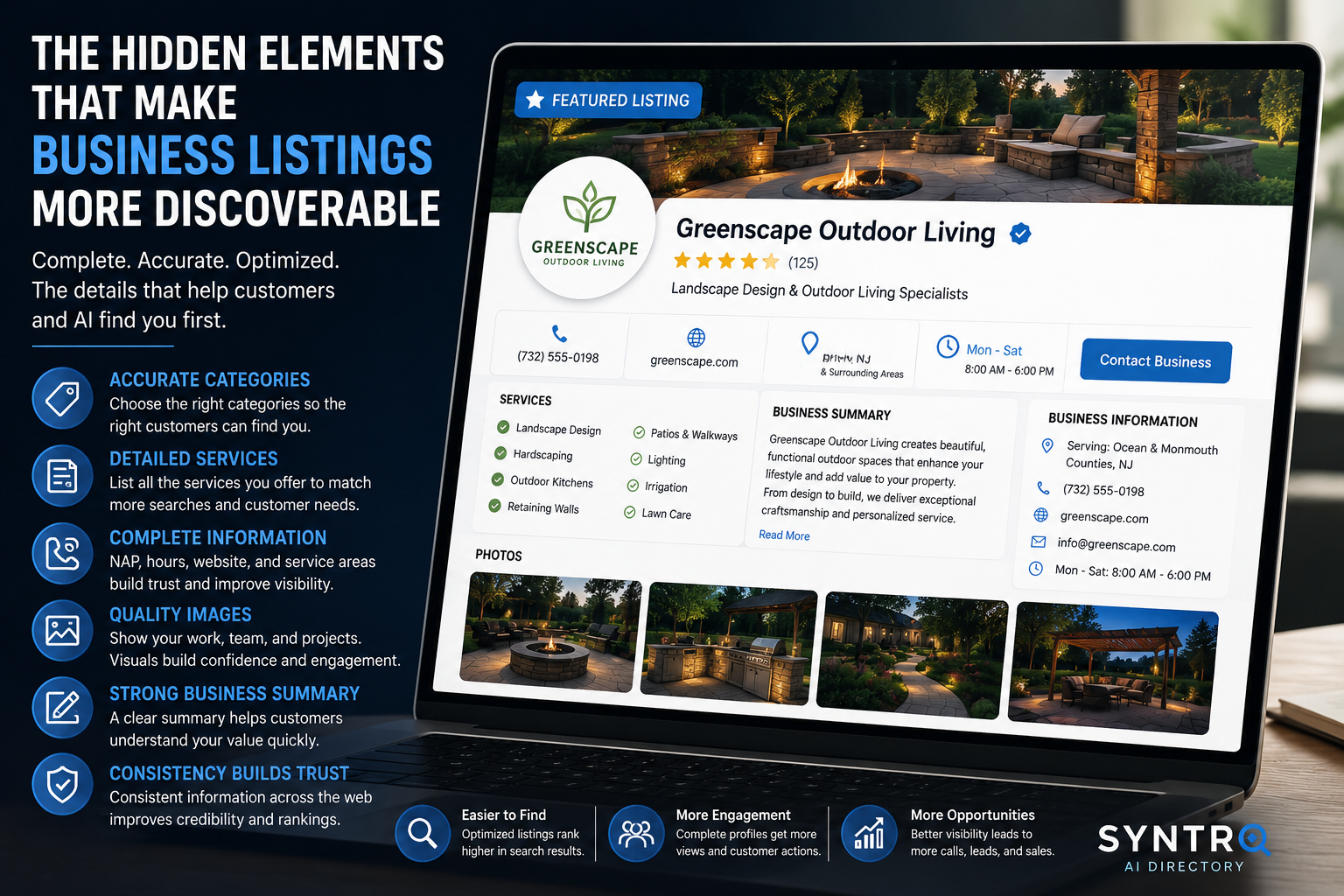
    Many businesses assume that simply being listed in a directory is enough to generate visibility. While having a listing is certainly better than having no presence at all, the reality is that not all listings perform equally.

    Some business profiles consistently receive more views, more engagement, and more inquiries than others. Often, the difference has little to do with the size of the company or the amount of money spent on advertising. Instead, it comes down to how effectively the listing communicates information.

    Modern search systems, AI-driven discovery tools, and directory platforms rely heavily on structured information. The more clearly a business presents itself, the easier it becomes for both people and technology to understand what that business offers.

    This is why certain listing elements have a much greater impact on discoverability than many business owners realize.

    Visibility Begins With Clarity

    When someone searches for a service, they are usually looking for a solution to a specific problem.

    A homeowner may be searching for landscape design services.

    A business owner may be looking for accounting assistance.

    A family may need a local contractor, attorney, electrician, or healthcare provider.

    In each case, the goal of a directory is to connect the right business with the right person at the right time.

    To accomplish this, the platform must understand exactly what a business does.

    The clearer the information, the better the chances of making that connection.

    Business Categories Matter More Than Most Think

    One of the most influential components of any directory listing is category selection.

    Categories act as organizational signals that help search systems classify businesses.

    Selecting overly broad categories often reduces visibility because the business becomes difficult to distinguish from competitors.

    Selecting categories that accurately reflect core services helps improve relevance.

    For example, a company may simply identify itself as a contractor. While technically accurate, that description provides very little context.

    A profile that specifies services such as kitchen remodeling, outdoor living construction, retaining walls, custom decks, or landscape design provides much stronger signals.

    The more precise the categorization, the easier it becomes for users and systems to identify appropriate matches.

    Service Descriptions Add Context

    Categories tell platforms where a business belongs.

    Service descriptions explain what the business actually does.

    Many companies underestimate how much value exists in this section.

    A detailed service description helps answer important questions before a customer ever makes contact.

    It provides context about expertise, specialties, project types, and service areas.

    More importantly, it helps AI-driven systems understand the relationship between services and customer needs.

    The goal is not to write lengthy sales copy.

    The goal is to communicate clearly and accurately.

    Accurate Contact Information Builds Trust

    Business information should always be complete, current, and consistent.

    This includes:

    • Business name
    • Phone number
    • Website
    • Email address
    • Service area
    • Business hours

    Incomplete information creates friction.

    Visitors may hesitate to contact a business if information appears outdated or inconsistent.

    AI systems also rely on these details to verify legitimacy and establish confidence in a listing.

    A profile with accurate contact information sends a simple message:

    This business is active, accessible, and trustworthy.

    Images Tell a Story

    Visual content often influences decisions faster than written descriptions.

    Customers want to see examples of work, products, facilities, and completed projects.

    Images help businesses establish credibility and demonstrate quality.

    A landscaping company may showcase completed outdoor living projects.

    A restaurant may display its dining experience.

    A contractor may highlight recent renovations.

    Visual content helps visitors imagine what working with a business may look like.

    The strongest listings use images strategically rather than simply uploading random photos.

    Each image should support the story the business is trying to tell.

    Business Summaries Help Discovery Systems Understand You

    A well-written business summary serves multiple purposes.

    It provides visitors with a quick overview while simultaneously helping discovery systems understand the business.

    Effective summaries often explain:

    • Who the company serves
    • What services are provided
    • What makes the business unique
    • Where services are offered

    The summary should be concise, informative, and customer-focused.

    When written correctly, it becomes one of the most valuable sections within a listing.

    Consistency Creates Confidence

    One of the strongest signals a business can provide is consistency.

    Information that aligns across websites, social media profiles, directories, and other online platforms creates confidence.

    When business names, contact details, service descriptions, and branding remain consistent, trust naturally increases.

    Consistency reduces uncertainty for both customers and technology platforms.

    In an increasingly digital world, confidence matters.

    Why Complete Profiles Receive More Attention

    Businesses often ask why some listings generate more engagement than others.

    The answer is usually straightforward.

    Complete profiles provide more information.

    More information creates more context.

    More context improves understanding.

    Better understanding leads to better matching between businesses and potential customers.

    Visibility is rarely random.

    It is often the result of providing enough information for discovery systems to make accurate recommendations.

    Preparing for the Future of Search

    Search behavior continues to evolve.

    Traditional search engines remain important, but customers increasingly rely on AI assistants, recommendation engines, and conversational search tools to find information.

    These systems depend on structured data and complete business profiles.

    Businesses that invest time in creating detailed, accurate listings today position themselves for greater visibility tomorrow.

    The future belongs to businesses that communicate clearly.

    Final Thoughts

    Discoverability is no longer determined solely by having a website or running advertisements.

    The quality of a business listing plays an increasingly important role in how customers and AI-driven systems find, evaluate, and recommend businesses.

    Categories, service descriptions, images, summaries, and accurate contact information all contribute to a stronger profile.

    Individually, these elements may seem small.

    Together, they create a complete digital presence that improves visibility, builds trust, and helps businesses connect with more opportunities.

    The businesses that stand out are often not the loudest.

    They are simply the easiest to understand.

  • Why Claiming Your Business Listing Is One of the Smartest Digital Moves You Can Make

    Why Claiming Your Business Listing Is One of the Smartest Digital Moves You Can Make

    In today’s digital marketplace, visibility is no longer determined solely by advertising budgets or website traffic. Businesses are discovered through dozens of online sources, including search engines, directories, AI assistants, review platforms, social profiles, and recommendation systems.

    The challenge many business owners face is maintaining control over how their business is represented across these channels.

    In many cases, a business may already appear online through publicly available information, customer references, or third-party data sources. While having a presence is beneficial, an unclaimed listing often means the business owner has little control over the information being displayed.

    Claiming a business listing changes that.

    It transforms a passive online presence into an actively managed digital asset.

    What Does It Mean to Claim a Listing?

    Claiming a listing is the process of verifying ownership or management of a business profile.

    Once verified, the business gains the ability to manage information, update details, add content, and ensure the profile accurately represents the company.

    Without ownership verification, information may remain outdated, incomplete, or inconsistent.

    With ownership comes control.

    That control plays an increasingly important role in today’s search and discovery landscape.

    First Impressions Are Often Digital

    Before making contact, most customers conduct research.

    They search online.
    They compare options.
    They review websites.
    They evaluate business profiles.

    A directory listing may be one of the first interactions a potential customer has with a business.

    If the information is incomplete or outdated, confidence may decline before the first conversation ever takes place.

    A claimed listing allows businesses to present themselves professionally and accurately from the very beginning.

    Accurate Information Builds Trust

    Trust is often established through small details.

    Business hours.
    Phone numbers.
    Service descriptions.
    Website links.
    Coverage areas.

    When customers encounter accurate information, confidence increases.

    When they find conflicting details, uncertainty grows.

    Claiming a listing allows business owners to maintain accuracy and ensure customers always have access to the most current information available.

    Trust begins with consistency.

    Businesses Change Over Time

    Few businesses remain exactly the same year after year.

    New services are introduced.

    Markets expand.

    Products evolve.

    Service areas grow.

    Staff increases.

    Projects become more sophisticated.

    An unclaimed profile often fails to reflect those changes.

    A claimed listing provides the flexibility to evolve alongside the business.

    It becomes a living representation rather than a static snapshot.

    Visibility Depends on Context

    Modern discovery systems seek context.

    Simply knowing a business name is no longer enough.

    Platforms increasingly evaluate information such as:

    • Services offered
    • Industries served
    • Geographic coverage
    • Business descriptions
    • Images and media
    • Categories and specialties

    The more context available, the easier it becomes for systems to understand when a business may be relevant to a particular search.

    Claiming a profile allows businesses to provide that context directly.

    Customers Expect Complete Information

    Consumer expectations continue to rise.

    People want answers quickly.

    They want to know:

    • What services are offered?
    • Where does the company operate?
    • What types of projects are completed?
    • How can they get in touch?

    Businesses that provide complete information remove barriers to engagement.

    Businesses that leave questions unanswered often lose opportunities to competitors who communicate more clearly.

    Claiming a profile helps eliminate those gaps.

    Visual Content Makes a Difference

    Images have become one of the most influential elements within business profiles.

    Photos help visitors evaluate:

    • Professionalism
    • Quality
    • Experience
    • Style
    • Capabilities

    A contractor can showcase completed projects.

    A restaurant can highlight its dining experience.

    A professional service provider can create familiarity before the first interaction.

    Visual content strengthens credibility and provides evidence of expertise.

    Claimed listings allow businesses to control that visual story.

    The Value of Ongoing Updates

    One of the greatest advantages of claiming a listing is the ability to keep information current.

    Many business owners create online profiles and never revisit them.

    However, digital visibility is not a one-time project.

    It requires occasional maintenance.

    Regular updates help ensure:

    • Contact information remains accurate
    • Service offerings stay current
    • New projects are showcased
    • Business descriptions reflect growth

    A profile that evolves over time remains more useful to both customers and discovery systems.

    Active Profiles Often Perform Better

    Businesses that actively manage their digital presence tend to benefit from stronger engagement.

    This is not because activity alone creates visibility.

    It is because active management improves accuracy, relevance, and completeness.

    Those qualities help visitors make decisions and help platforms understand the business more effectively.

    An active profile sends a simple message:

    This business is engaged, current, and attentive.

    Looking Ahead

    The way people discover businesses continues to evolve.

    Search engines are becoming more conversational.

    AI-powered systems are becoming more influential.

    Customers increasingly rely on recommendations generated by technology rather than manually reviewing dozens of websites.

    In this environment, businesses that maintain accurate, complete, and actively managed profiles gain an important advantage.

    Claiming a listing is no longer simply about ownership.

    It is about ensuring a business is represented correctly wherever discovery takes place.

    Final Thoughts

    A business listing is often one of the most visible digital assets a company owns.

    When left unclaimed, opportunities for accuracy, engagement, and visibility are limited.

    When claimed and actively managed, a listing becomes a powerful communication tool that helps customers understand the business and helps discovery systems connect the right companies with the right audiences.

    The businesses that thrive in the future will not simply exist online.

    They will actively manage how they are represented.

    Claiming a listing is one of the simplest and most effective ways to start.

  • Why Complete Directory Listings Outperform Incomplete Profiles

    Why Complete Directory Listings Outperform Incomplete Profiles

    Every business wants more visibility. Most business owners focus on websites, advertising, social media, and reviews when they think about being discovered online. While those elements remain important, there is another factor that is often overlooked: the quality and completeness of a business listing.

    Many directory listings are created with the best intentions but never fully completed. A business name is added, a phone number is entered, and perhaps a website link is included. The listing technically exists, but it does very little to help customersโ€”or AI-driven discovery systemsโ€”understand what the business actually does.

    In today’s digital environment, incomplete information creates uncertainty. The more uncertainty that exists, the less likely a business is to be recommended, referenced, or selected.

    Complete listings consistently outperform incomplete profiles because they provide clarity, context, and confidence.

    Why Business Information Matters More Than Ever

    Historically, directories were simple references. They served as digital versions of the phone book, helping users locate a company and obtain contact information.

    Modern discovery works differently.

    Customers increasingly rely on search engines, AI assistants, recommendation systems, and digital directories to narrow their options before making contact. These systems evaluate information before presenting businesses to users.

    The more complete a profile becomes, the easier it is for systems to understand the business and determine when it may be relevant to a search or recommendation.

    This means visibility is no longer determined solely by existence. It is influenced by completeness.

    The Cost of Incomplete Profiles

    An incomplete listing often leaves critical questions unanswered.

    Potential customers may wonder:

    • What services are offered?
    • What areas are served?
    • What type of projects are accepted?
    • Is the business still active?
    • What makes the company different?

    AI systems face similar challenges.

    When key information is missing, systems must make assumptions. The less certainty they have, the less confidence they can place in a recommendation.

    As a result, businesses with incomplete profiles often receive fewer opportunities despite offering excellent services.

    The issue is not quality.

    The issue is missing context.

    The Foundation of a Strong Listing

    Every high-performing directory profile begins with accurate business information.

    Business name, phone number, website address, service area, and category selection create the foundation upon which everything else is built.

    Consistency is particularly important.

    When information aligns across multiple digital properties, trust increases. When information conflicts or remains incomplete, uncertainty grows.

    A complete listing creates a stronger digital footprint and establishes a clearer representation of the business.

    Services Matter More Than Most Businesses Realize

    One of the most overlooked sections of a listing is the services field.

    Many businesses provide a wide range of services but only mention one or two. This limits how effectively customers and systems can understand the business.

    For example, a landscaping company may offer:

    • Landscape design
    • Hardscape construction
    • Retaining walls
    • Outdoor kitchens
    • Landscape lighting
    • Drainage solutions

    If only “landscaping” appears in the listing, a large portion of the company’s expertise remains hidden.

    Detailed service information creates stronger contextual signals and allows businesses to appear in a broader range of relevant searches.

    Visual Content Builds Confidence

    Images help transform information into understanding.

    A complete profile should include professional photos that demonstrate:

    • Work quality
    • Service capabilities
    • Finished projects
    • Team professionalism

    Customers naturally trust businesses that provide visual evidence of their work.

    Visual content also helps reinforce service categories and project types, creating a more complete representation of the business.

    The goal is not quantity but relevance.

    Every image should help tell the story of what the business does.

    Business Descriptions Provide Context

    A well-written business description does more than fill space.

    It explains:

    • Who the business serves
    • What problems it solves
    • What makes it unique
    • How it approaches its work

    Many business owners write descriptions focused entirely on themselves.

    The strongest descriptions focus on customers.

    They clearly communicate value while helping visitors and AI systems understand the company’s purpose.

    A thoughtful description transforms a basic listing into a meaningful profile.

    Claimed Listings Create Greater Trust

    Claiming a listing is one of the simplest actions a business can take to improve its profile.

    Claimed listings demonstrate that:

    • Information has been reviewed
    • Details are current
    • Ownership has been verified

    This additional layer of confidence benefits both users and discovery systems.

    A claimed listing signals active participation rather than passive presence.

    That distinction matters.

    Why Ongoing Updates Are Important

    Business information changes.

    Services evolve.
    Service areas expand.
    Projects grow more sophisticated.
    New photos become available.

    A listing should reflect those changes.

    Businesses that periodically review and update their profiles maintain stronger digital accuracy and remain more relevant over time.

    A profile should be treated as a living asset rather than a one-time setup.

    The Competitive Advantage of Completeness

    In many industries, competitors offer similar services.

    The difference often comes down to presentation.

    Businesses that provide complete, accurate, and informative listings create less uncertainty for both customers and AI-driven systems.

    This leads to stronger visibility, increased trust, and better opportunities.

    The advantage is not necessarily who spends the most on advertising.

    Often, it is who communicates most clearly.

    Final Thoughts

    A directory listing is far more than a name and phone number.

    It is a digital representation of a business and an important source of information for customers, search systems, and AI-driven discovery platforms.

    Complete listings consistently outperform incomplete profiles because they reduce uncertainty and improve understanding.

    Businesses that invest time in creating accurate, detailed, and regularly updated profiles position themselves for greater visibility and stronger long-term results.

    In a world where discovery increasingly depends on clarity, completeness is no longer optionalโ€”it is a competitive advantage.

  • How Businesses Are Found (or Ignored) by AI Today

    How Businesses Are Found (or Ignored) by AI Today

    Introduction: Search Has Changed โ€” Most Businesses Havenโ€™t

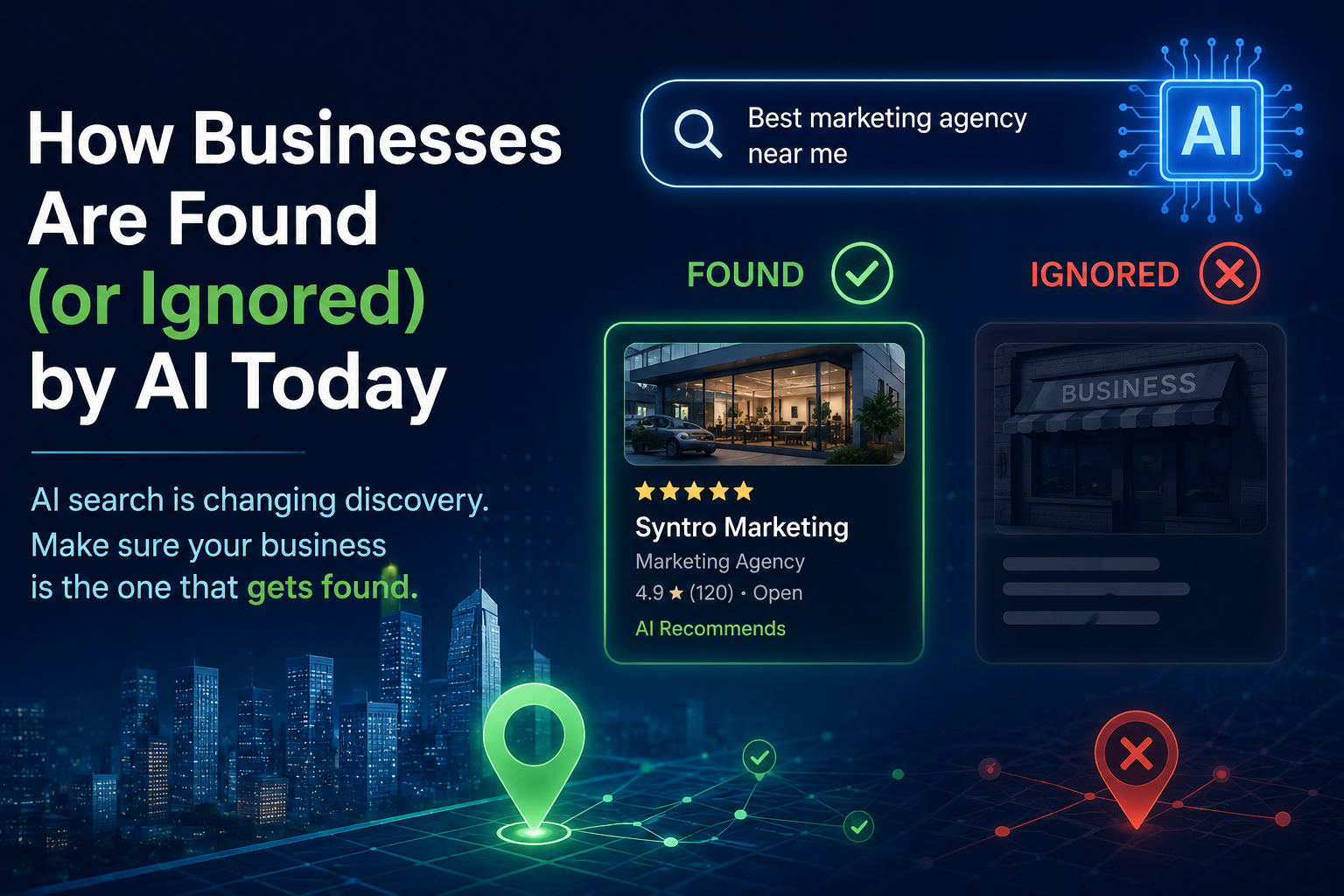
    For years, business visibility was about ranking on Google, collecting reviews, and keeping a website updated. That model still mattersโ€”but itโ€™s no longer the whole picture.

    Today, customers are increasingly asking AI-powered systems questions like:

    • โ€œWhoโ€™s the best plumber near me?โ€
    • โ€œWhich landscaper services my area?โ€
    • โ€œWhat local business can handle this job?โ€

    And instead of returning ten blue links, AI now chooses answers.

    That shift has changed what โ€œvisibilityโ€ actually means. Being online is no longer enough. Being understandable, trustworthy, and structured for AI has become critical.

    This is where most businesses struggleโ€”and exactly where modern AI directories begin to matter.


    How AI Search Engines Decide Which Businesses to Recommend

    AI search systems donโ€™t โ€œbrowseโ€ the web the way humans do. They evaluate signalspatterns, and structured data to determine which businesses are reliable answers to a question.

    At a high level, AI looks for:

    • Clear identification of what a business does
    • Consistent service and location information
    • Verifiable trust signals
    • Structured content it can interpret confidently

    If that information is scattered, outdated, or inconsistent, the business is often skippedโ€”regardless of how good the service actually is.

    This is why many high-quality local businesses remain invisible in AI-generated answers while less-qualified competitors show up instead.


    Why Traditional Listings Alone Are No Longer Enough

    Most business directories were built for humans, not machines.

    They often rely on:

    • Minimal profile fields
    • Inconsistent categorization
    • Weak contextual signals
    • No clear relationship between services, locations, and authority

    As a result, AI systems may index themโ€”but they rarely trust them.

    Modern visibility requires more than a name and phone number. It requires contextstructure, and verificationโ€”presented in a way AI can confidently interpret.

    This is where the next generation of directories separates itself.


    What Makes an AI-Optimized Directory Different

    An AI-optimized directory is not just a list of businesses. It is a structured knowledge layer.

    While the underlying systems may vary, effective AI directories share common principles:

    • Businesses are categorized clearly and consistently
    • Service offerings are defined, not implied
    • Locations are explicit, not assumed
    • Trust indicators are visible and reinforced
    • Content is written for clarity, not marketing fluff

    This structure allows AI systems to answer questions with confidence instead of guessing.

    When done correctly, the directory becomes a reference source, not just a destination.


    How the SYNTRO AI Directory Approaches Visibility Differently

    The SYNTRO AI Directory was designed specifically for this new search environment.

    Rather than treating listings as static profiles, SYNTRO focuses on business clarity and contextual authority. Each listing is built to help AI systems understand:

    • What the business does
    • Where it operates
    • Who it serves
    • Why it can be trusted

    This isnโ€™t about gaming algorithms or chasing trends. Itโ€™s about presenting businesses in a way that aligns with how AI already evaluates information.

    Importantly, SYNTRO balances structure with simplicityโ€”so businesses donโ€™t need technical knowledge to benefit.


    Visibility Is No Longer About Ranking โ€” Itโ€™s About Being Chosen

    Traditional SEO asks:

    โ€œHow high does my website rank?โ€

    AI-driven discovery asks:

    โ€œIs this business a reliable answer?โ€

    Thatโ€™s a fundamental shift.

    AI doesnโ€™t need to show ten options. It often shows oneโ€”or a very small set. Businesses that are clearly defined, consistently represented, and contextually strong are far more likely to be selected.

    Directories that reinforce those qualities donโ€™t just help businesses get seen. They help businesses get recommended.


    Why Structure Matters More Than Volume

    One common misconception is that visibility comes from being โ€œeverywhere.โ€

    In reality, AI prioritizes signal quality over signal quantity.

    A smaller number of well-structured, authoritative references can outperform dozens of weak or inconsistent ones. Thatโ€™s why a directory built with intentional structure can have an outsized impact compared to generic listing sites.

    SYNTRO focuses on quality alignment, not noise.


    The Role of Trust in AI Visibility

    Trust is not abstract to AI systems. It is inferred through patterns such as:

    • Consistency across data sources
    • Clear alignment between services and locations
    • Verified information
    • Contextual relevance

    Directories that reinforce these patterns help AI systems reduce uncertainty. Reduced uncertainty leads to higher confidenceโ€”and higher confidence leads to recommendations.

    This is why trust-focused directories are becoming foundational assets rather than optional marketing tools.


    What This Means for Businesses Moving Forward

    AI-driven discovery is not a future trendโ€”itโ€™s already happening.

    Businesses that adapt early gain a significant advantage:

    • Stronger visibility
    • Better-quality leads
    • Less dependence on ads
    • More durable online presence

    Those that donโ€™t may still exist onlineโ€”but increasingly outside the AI conversation.

    Directories that understand this shiftโ€”and are structured accordinglyโ€”become long-term visibility partners, not just listings.


    Final Thought: Visibility Is Now an Infrastructure Decision

    Choosing where and how your business appears online is no longer just a marketing choice. Itโ€™s an infrastructure decision.

    The platforms that represent your business help define how AI understands it.

    The SYNTRO AI Directory exists to ensure that understanding is clear, accurate, and trustedโ€”without exposing complexity or requiring businesses to become experts in AI systems themselves.

    As AI continues to shape how customers discover local businesses, structure, clarity, and trust will define who gets chosen.

  • Why AI Visibility Matters for Modern Business Discovery

    Why AI Visibility Matters for Modern Business Discovery

    AI Search Is Changing Discovery

    Customers are no longer relying only on traditional search engines to find businesses. They are asking AI tools like ChatGPT, Gemini, Claude, and Perplexity for recommendations, comparisons, and local options, which means your business needs to be understandable not just to search engines, but to AI systems as well.

    SYNTRO AI Directory helps businesses strengthen that visibility with AI-optimized listings, structured business data, stronger authority signals, and tools designed to turn discovery into qualified leads.

    What AI Visibility Means

    AI visibility is the ability for your business to appear accurately and confidently when AI platforms generate answers for users. Instead of ranking only for keywords, businesses now need complete, consistent, and trustworthy information that AI systems can interpret and reference.

    • Clear business descriptions and service details
    • Consistent category and location data
    • Authority signals that support trust
    • Profiles designed for both people and AI systems

    Why Traditional SEO Alone Is Not Enough

    Search engine optimization still matters, but customer behavior is evolving. AI assistants often summarize information, compare providers, and recommend businesses directly, reducing the number of steps between search and decision. If your business data is incomplete or inconsistent, you may be overlooked before a visitor ever reaches your website.

    In the AI era, discoverability depends on clarity, consistency, and credibility across your digital presence.

    How SYNTRO AI Directory Helps

    SYNTRO AI Directory is built for businesses that want to improve how they are found in AI-driven search experiences. Our platform helps local and national brands present stronger business information, improve discoverability, and create more opportunities for customer inquiries.

    • AI-optimized business listings
    • Listing claim functionality for better control
    • Enhanced and premium visibility options
    • AI visibility score signals
    • Category and location-based discovery
    • Lead generation and inquiry tools

    Who Benefits Most

    Businesses in competitive industries can benefit significantly from stronger AI visibility. Home services, legal, medical, real estate, restaurants, technology, finance, and other service-based categories all depend on being easy to find and easy to trust when customers are ready to act.

    Whether you are building awareness, improving local discoverability, or generating more qualified leads, a stronger AI-ready profile can help position your business where modern customers are already searching.

    Start Building AI Presence

    The future of business discovery is already here. SYNTRO AI Directory gives businesses a smarter way to strengthen visibility, improve trust signals, and compete in a landscape where AI-generated answers are shaping customer decisions every day.

    If you want your business to be easier to find in the next generation of search, now is the time to build a profile designed for AI visibility.